

Your patients need your expertise. Yet with limited hours in a day and days in a year, treating and caring for every patient who needs support is an impossibility. However, optimizing your workflows to maximize patient scheduling and treatment is very possible. In fact, it’s imperative.
For today’s optometrists and ophthalmologists, workflow efficiency is no longer a “nice to have.” It is directly tied to patient satisfaction, staff retention, clinical outcomes, and revenue growth. With patients increasingly frustrated by long wait times and practices under pressure to do more with less space and fewer staff, rethinking how diagnostic testing fits into the patient journey has become critical.
One area where inefficiency often hides in plain sight is visual field testing. Traditionally, visual field tests have required dedicated rooms, stationary equipment, and significant staff involvement, creating bottlenecks that slow patient flow and degrade the experience.
This article explores how modern, virtual approaches to visual field testing can dramatically improve efficiency while maintaining (and often improving) clinical reliability, using real-world insights from an experienced private practice owner.
Watch Dr. Janelle Davison speak on the topic of workflow efficiency in visual field testing in this on-demand webinar.
Why Workflow Efficiency Matters in Eye Care
Research consistently shows that patients become frustrated after waiting as little as 30 minutes. In eye care practices, long wait times don’t just impact satisfaction; they influence outcomes:
- Patients who wait longer are less engaged during exams
- Frustrated patients are less likely to purchase eyewear
- Long delays increase negative reviews and reduce referrals
- Staff morale declines when schedules run behind
From a business perspective, inefficient workflows can also reduce profitability. Diagnostic testing that occupies rooms or requires constant staff supervision limits the number of patients that can be seen in a day.
Efficient practices focus on one core goal: getting patients from check-in to check-out smoothly, comfortably, and predictably.
Common Workflow Challenges in Visual Field Testing
Many practices face the same issues when it comes to traditional visual field exams:
1. Dedicated Room Bottlenecks
Traditional tabletop visual field machines require a quiet, dedicated space. When that room is occupied, other testing stops.
2. Staff Dependency
Visual field tests often require staff to remain nearby or in the room, pulling technicians away from other patients.
3. Patient Discomfort
Poor positioning, neck strain, and long testing times lead to fatigue, anxiety, and unreliable results, especially for glaucoma patients who require repeat testing.
4. Unreliable Data
High fixation losses and false positives can render a glaucoma visual field test clinically unusable, forcing retests and further delays.
When these issues stack up, practices lose time, revenue, and patient trust.
Learn how Scott and Christie Eyecare Associates ensure glaucoma patient treatment plan compliance with Virtual Field.
Rethinking the Patient Journey
High-performing practices take a step back and map the patient journey end to end:
- Virtual paperwork completed before arrival
- Minimal waiting room time
- Diagnostic testing performed in the exam room
- Fewer room transitions
- Clear communication and faster visits
This approach mirrors workflows already common in other areas of healthcare, where equipment is brought to the patient rather than moving the patient between rooms.
Applying this mindset to visual field tests opens the door to major efficiency gains.
The Rise of Virtual Visual Field Testing
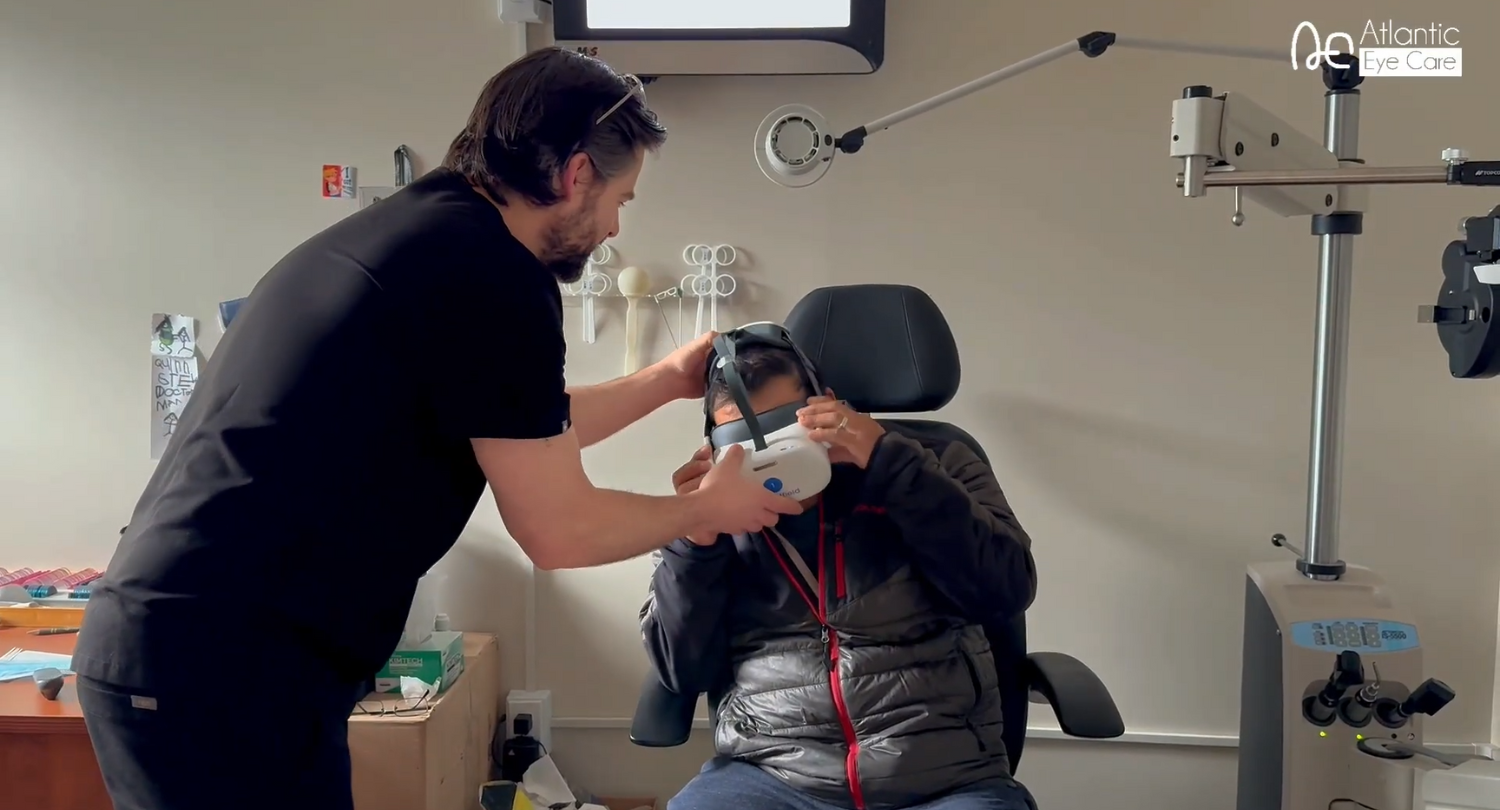
Virtual visual field technology replaces bulky tabletop equipment with lightweight, portable headsets. These systems allow providers to perform:
- Standard automated perimetry
- Screening visual field tests
- Glaucoma monitoring
- Color vision testing
- Pupilometry (on advanced models)
All without requiring a fixed testing room.
From a workflow standpoint, this shift is transformational.
How Virtual Visual Field Testing Improves Efficiency
1. Testing Happens in the Exam Room
Instead of escorting patients to a separate pre-test area, the visual field test comes directly to the patient. This eliminates unnecessary movement and room congestion.
2. Reduced Staff Burden
Modern systems provide automated instructions and real-time monitoring, enabling staff to initiate the test and proceed to other tasks.
3. Better Use of Space
Practices with limited square footage can repurpose former pre-test rooms into additional exam lanes, significantly increasing capacity without expanding the footprint.
4. Faster Glaucoma Workups
For glaucoma patients, providers can complete OCT imaging and visual field testing in a single visit, review results immediately, and make treatment decisions more quickly.
Patient Comfort Drives Better Visual Field Results
One of the most overlooked aspects of visual field testing is patient psychology.
Many patients dread traditional testing due to:
- Uncomfortable positioning
- Long, monotonous exams
- Anxiety about “doing it wrong”
Virtual testing allows patients to remain seated comfortably with natural head positioning. The immersive experience keeps patients engaged, which often leads to:
- Fewer fixation losses
- Lower false-positive rates
- More reliable glaucoma visual field tests
In real-world practice, patients who previously could not produce reliable results can often complete accurate testing using virtual methods.
Learn more about how virtual visual field testing compares to traditional tabletop perimeters in this clinical study:

A Real-World Success Story: Reliable Results at Last
Consider a patient with suspected normal-tension glaucoma who had spent years producing unreliable visual field results. Traditional testing showed excessive fixation losses and false positives, making long-term monitoring nearly impossible.
When tested using a virtual visual field system, the patient produced reliable data for the first time, with minimal false positives and consistent fixation. The difference was not clinical capability, it was comfort and engagement.
For providers managing glaucoma, reliable visual field tests are essential to protecting and preserving vision.
ROI Considerations for Virtual Visual Field Testing
When evaluating return on investment, practices should consider:
- Monthly test volume
- Reimbursement rates for visual field testing
- Subscription vs. capital purchase models
- Reduced staffing needs
- Increased exam room utilization
Subscription-based models are especially attractive for new or growing practices, as they preserve cash flow while allowing immediate access to advanced testing.
The key metric is simple: run more tests than your monthly cost.
Download our guide to learn more about the financial impact of upgrading to virtual visual field testing:

Ideal for New and Space-Constrained Practices
For new practice owners, virtual testing offers a compelling alternative to traditional tabletop equipment:
- Lower upfront costs
- Minimal space requirements
- Faster implementation
- Scalable as patient volume grows
Many modern practices now operate with fully mobile diagnostic equipment, reserving fixed rooms only for technologies that cannot be made portable.
Implementing Change Without Disrupting Your Practice
Adopting new workflows can feel disruptive, but disruption is not inherently negative. Successful implementation depends on:
- Clearly explaining the “why” to staff
- Training during low-volume hours
- Monitoring workflows and adjusting quickly
- Measuring improvements in time, flow, and patient feedback
Compared with many practice changes, virtual visual field testing is often among the easiest to adopt.
The Future of Visual Field Testing
As eye care continues to evolve, efficiency, mobility, and patient experience will drive technology adoption. Virtual approaches to visual field testing are not just a trend—they represent a fundamental shift in how practices deliver care.
By reducing bottlenecks, improving patient comfort, and delivering reliable data, virtual visual field systems help practices work smarter, not harder.
For providers committed to excellent care, strong clinical outcomes, and sustainable growth, rethinking how visual field tests fit into the workflow is no longer optional. It’s essential.
If you’re ready to upgrade your practice’s testing capabilities, save money, and create exceptional patient experiences, book a demo of our virtual visual field analyzer:

About Virtual Field
Virtual Field delivers an exceptional eye exam experience. Eye care professionals including ophthalmologists and optometrists examine patients faster, more efficiently, and more comfortably than ever before. Exams include Visual Field, 24-2, Kinetic Visual Field (Goldmann Perimetry), Ptosis, Esterman, Color Vision, Pupillometry, Extraocular Motility (EOM), and more.
