

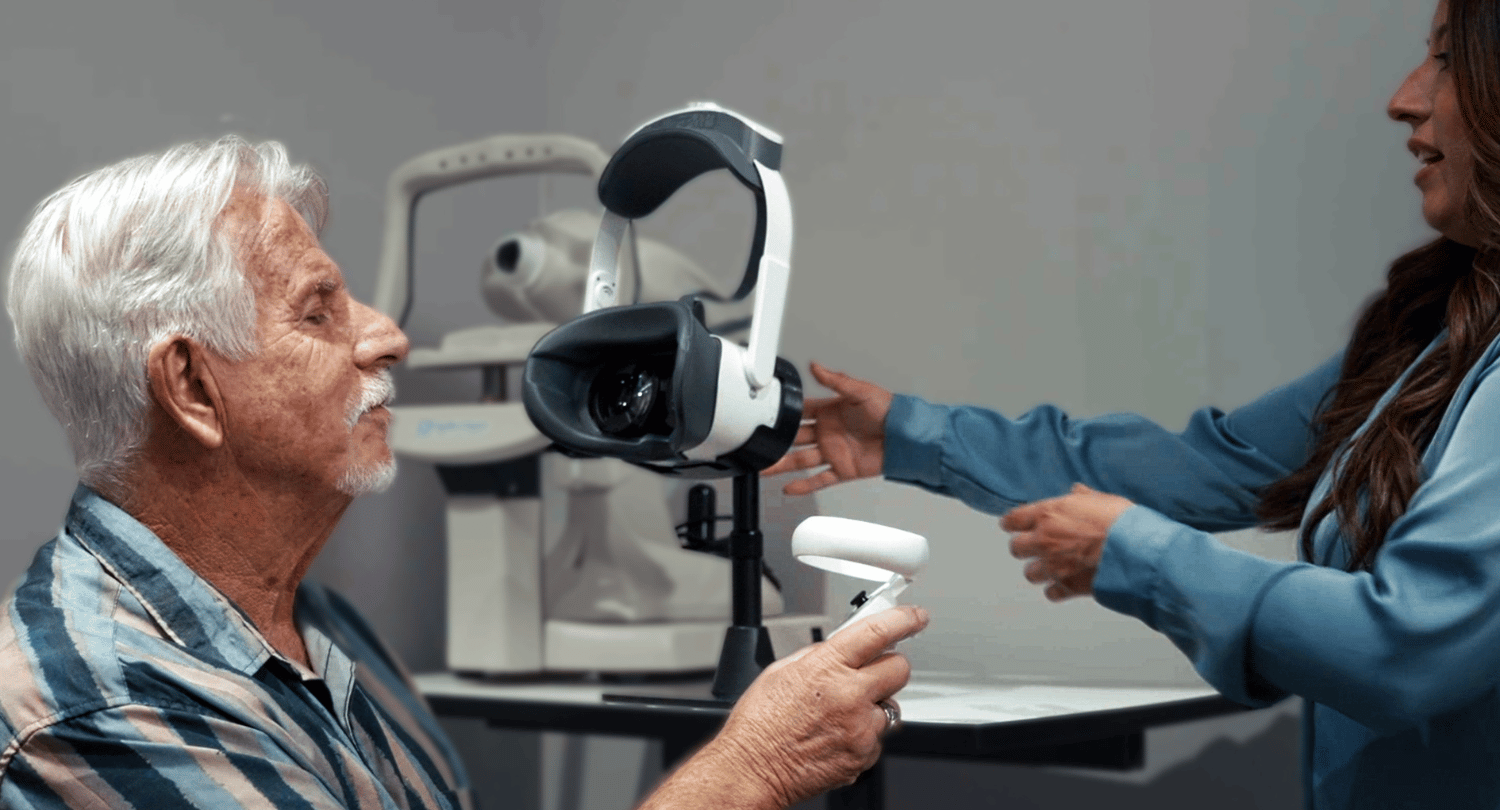
January is Glaucoma Awareness Month, a time to spotlight one of the leading causes of irreversible blindness worldwide — and to examine how eye care organizations are evolving to manage chronic eye disease better. Glaucoma is not a condition that can be addressed with a single visit or one-time intervention. It requires early detection, consistent monitoring, and long-term care coordination.
This reality is driving a broader shift in healthcare: the rise of chronic care initiatives. Across health systems, chronic care initiatives are reshaping how diseases are detected, monitored, and managed over time. In eye care, these initiatives are especially relevant for conditions such as glaucoma, diabetic retinopathy, and age-related macular degeneration — conditions in which outcomes depend on ongoing access to testing and timely intervention.
For eye care leaders, particularly those within large hospitals, health systems, and integrated delivery networks, understanding chronic care initiatives is a business and operational imperative.
What Are Chronic Care Initiatives in Eye Care?
Chronic care initiatives are coordinated efforts designed to improve outcomes for patients with long-term conditions through proactive, continuous management rather than episodic treatment. In healthcare more broadly, these initiatives emphasize prevention, early detection, patient engagement, and data-driven decision-making.
In eye care, chronic care initiatives focus on managing diseases that:
- Progress slowly over time
- Often present without early symptoms
- Require repeated testing and monitoring
- Carry high social and economic costs when left unmanaged
Conditions like glaucoma fit squarely within this framework. Effective glaucoma care depends on regular visual field testing, longitudinal data tracking, and consistent follow-up, underscoring why chronic care models are becoming essential in ophthalmology and optometry.
Rather than reacting to vision loss after it occurs, chronic care initiatives aim to identify risk earlier, intervene sooner, and monitor patients consistently over years or decades.
Why Glaucoma Is a Model Chronic Eye Disease
Glaucoma Requires Lifelong Monitoring
Glaucoma is a progressive optic neuropathy that often develops without noticeable symptoms until significant vision loss has occurred. Once damage is done, it cannot be reversed. As a result, effective glaucoma management relies heavily on ongoing monitoring, particularly through the glaucoma visual field test.
A single visual field test provides a snapshot in time. Still, trends across multiple visual field tests help clinicians assess disease progression, treatment effectiveness, and the risk of future vision loss. This comprehensive data trending makes glaucoma fundamentally different from acute eye conditions and firmly places it in the realm of chronic disease management.
The Cost of Delayed or Missed Detection
When glaucoma is diagnosed late or monitored inconsistently, the consequences extend beyond individual patients. Vision loss affects quality of life, independence, and employability, and increases long-term healthcare costs for systems and payers.
From a business perspective, preventable vision loss represents:
- Higher downstream care costs
- Increased burden on specialty services
- Poorer population health outcomes
Chronic care initiatives aim to reduce these risks by ensuring patients receive reliable, repeatable visual field testing throughout their care.
Government and Public Health Programs Driving Chronic Eye Care
The growing emphasis on chronic eye care is not happening in isolation. It is reinforced by national and global public health initiatives that shape health system priorities.
In the United States, the Centers for Disease Control and Prevention (CDC) leads efforts through its Vision Health Initiative, which promotes vision-loss prevention, supports surveillance systems to track eye-disease prevalence, and funds programs to expand access to eye care services. The Vision and Eye Health Surveillance System (VEHSS) provides data that helps policymakers and health systems identify gaps in care.
The National Eye Institute (NEI) supports research into chronic eye diseases and disseminates evidence-based guidance on early detection and management. Meanwhile, Healthy People 2030 includes vision-specific objectives that align eye care with broader public health goals.
Globally, the World Health Organization (WHO) advocates for integrated, people-centered eye care, emphasizing that eye health should be embedded within chronic disease strategies rather than treated as a standalone specialty.
For enterprise eye care organizations, these initiatives signal a clear expectation: chronic eye disease management is a system-level responsibility, not an isolated clinical task.
Integrated Care Models and the Role of Eye Care
Shared Care Across Specialties
Chronic care initiatives increasingly rely on integrated care models, where multiple providers collaborate to manage patients with complex, long-term conditions. Eye care is critical in these models, particularly for patients with systemic diseases such as diabetes and hypertension that directly affect vision.
In effective integrated care environments, primary care providers, endocrinologists, optometrists, and ophthalmologists work together, sharing data and aligning on care pathways. Visual field testing is an essential data point in the broader clinical picture, helping teams assess risk and intervene appropriately.
Data Continuity and Monitoring Gaps
Despite the promise of integrated care, many health systems still struggle with fragmentation, especially in diagnostic testing. Limited equipment availability, staffing challenges, or inconsistent workflows across sites often constrain visual field testing.
These gaps undermine chronic care initiatives. Without consistent access to visual field testing, longitudinal monitoring becomes difficult, delaying detection of disease progression and weakening the effectiveness of integrated care models.
Access, Equity, and the Scaling Challenge
Chronic eye diseases like glaucoma disproportionately affect older adults and underserved populations, including those with limited access to specialty care. Addressing these disparities is a core goal of many chronic care initiatives, yet it presents real operational challenges.
Traditional visual field testing is typically tied to in-clinic equipment and specialized staff. For large health systems serving diverse geographic regions, this model can limit access, create bottlenecks, and increase patient no-show rates.
Scaling chronic eye care requires rethinking how and where visual field testing is delivered to ensure patients receive timely monitoring without unnecessary barriers. Improving access is not only an equity issue; it’s also a practical requirement for managing growing patient populations with chronic eye disease.
Technology as an Enabler of Chronic Eye Care Initiatives
Telehealth, AI, and Decentralized Testing
Advances in telehealth and teleophthalmology are expanding what’s possible in chronic eye care. Remote care models, supported by digital tools and artificial intelligence, are helping providers analyze large volumes of clinical data and identify disease progression earlier.
With the rapid pace at which new technologies are entering the market, the visual field test remains foundational, but how it is delivered is changing. Decentralized and technology-enabled approaches can extend testing capacity beyond traditional clinic walls, enabling more consistent monitoring for patients who might otherwise fall through the cracks.
Why Visual Field Testing Is Foundational
No chronic care initiative for glaucoma can succeed without reliable visual field testing. It is the primary method for assessing functional vision loss and tracking changes over time. When access to testing is limited or inconsistent, even the most well-designed care models struggle to deliver results.
Modernizing visual field testing infrastructure allows eye care organizations to:
- Increase testing capacity
- Reduce delays in care
- Support proactive, longitudinal monitoring
For enterprise systems, this modernization is a key enabler of population-level glaucoma management.
What Chronic Care Initiatives Mean for Eye Care Businesses
As chronic care initiatives continue to reshape healthcare, eye care leaders must consider how their organizations are positioned to support long-term disease management.
Key questions include:
- Can patients access visual field testing when and where it’s needed?
- Are glaucoma patients monitored consistently over time?
- Do current workflows support population health goals, or do they create bottlenecks?
For large health systems, these questions are tied directly to operational efficiency, quality metrics, and patient outcomes. For growing practices, they influence scalability, staff utilization, and the ability to meet rising demand for chronic eye care services.
Aligning business operations with chronic care initiatives requires a shift in mindset, from viewing visual field testing as a standalone procedure to recognizing it as core infrastructure for long-term eye health.
Read Next: Learn how Scott & Christie Eye Care Associates implemented Virtual Field across their locations to improve their glaucoma care:

Conclusion: Chronic Care Initiatives Start With Better Monitoring
Chronic care initiatives are transforming how eye care organizations approach diseases like glaucoma, emphasizing prevention, early detection, and consistent monitoring. During Glaucoma Awareness Month, the importance of these efforts comes into sharp focus.
Glaucoma management depends on reliable visual field testing over time. Without scalable, accessible testing, chronic care initiatives struggle to deliver on their promise. For enterprise eye care leaders, investing in modern approaches to visual field testing is not just about technology. Rather, it’s about building a foundation for sustainable, proactive eye care.
As healthcare continues to move toward long-term, population-based models, the organizations that succeed will be those that align clinical goals, operational workflows, and patient access around the realities of chronic eye disease.
About Virtual Field
Virtual Field delivers an exceptional eye exam experience. Eye care professionals including ophthalmologists and optometrists examine patients faster, more efficiently, and more comfortably than ever before. Exams include Visual Field, 24-2, Kinetic Visual Field (Goldmann Perimetry), Ptosis, Esterman, Color Vision, Pupillometry, Extraocular Motility (EOM), and more.
