

.png)
Event Overview: Oculoplastic Community Reunites in Orlando
The 56th Annual ASOPRS Fall Scientific Symposium took place on October 16–17, 2025, at the Rosen Shingle Creek in Orlando, Florida. The meeting drew a dynamic crowd of oculofacial plastic surgeons, fellows-in-training, residents, and even some medical students and allied eye care professionals. Attendees were excited to reconnect with colleagues and form new friendships. In fact, this year saw record participation in the scientific program, with a “record number of abstract submissions” reflecting remarkable research contributions from colleagues worldwide. The energy was palpable both inside and outside the lecture halls – from engaged discussions during sessions to lively conversations at networking events and the Thursday evening reception.
Program Highlights: Innovations in Eyelid, Lacrimal, Orbital and Facial Surgery
ASOPRS 2025’s program delivered two days of cutting-edge content, spotlighting advances across all facets of oculoplastic surgery. Each morning kicked off with “Morning Rounds” case presentations, a fast-paced showcase of interesting cases, setting an interactive tone. From there, a series of general sessions and expert panels discussed the latest techniques, research, and best practices in the field. The agenda spanned everything from reconstructive eyelid surgery to aesthetic facial rejuvenation:
- Eyelid Surgery: Dedicated sessions on eyelid techniques featured new surgical approaches for ptosis repair, eyelid reconstruction, and the management of eyelid complications. For example, one morning session focused on “Eyelid: Techniques & Observations,” highlighting refined methods for eyelid repairs and outcomes. Attendees discussed innovations, including improved blepharoplasty techniques and novel treatments for eyelid retraction in thyroid eye disease (TED).
- Lacrimal and Orbital Surgery: The symposium also focused on tearing disorders and orbital disease. A combined session on “Lacrimal and Oncology” shared updates on lacrimal surgery outcomes and management of periocular tumors. In parallel, multiple talks addressed orbital conditions – from advances in orbital tumor resection to enhanced approaches for TED. One segment, “Orbital Disease: YASOPRS Session,” gave young surgeons a platform to present cutting-edge orbital case studies. Later, an “Orbit: Outcomes and Management” block examined new insights into orbital fracture repair and decompression techniques.
- Facial Aesthetic Surgery: Cosmetic and rejuvenation topics were a central theme. In the Baylis Cosmetic Surgery Award lecture, Dr. John B. Holds presented “Shaping Tomorrow’s Faces: Aesthetics in Oculofacial Surgery,” exploring future directions in facial cosmetic techniques. Additionally, a panel on regenerative medicine for facial rejuvenation discussed bioregenerative treatments (e.g. stem-cell therapies and PRP) that are revolutionizing aesthetic oculoplastic procedures. This “Rejuvenation Medicine” panel on Day 1 (Regenerative Medicine for Oculofacial Rejuvenation) underscored the growing role of regenerative techniques in eyelid and facial aesthetics.
Exhibit Hall Energy: Virtual Field’s Booth #208 Buzz
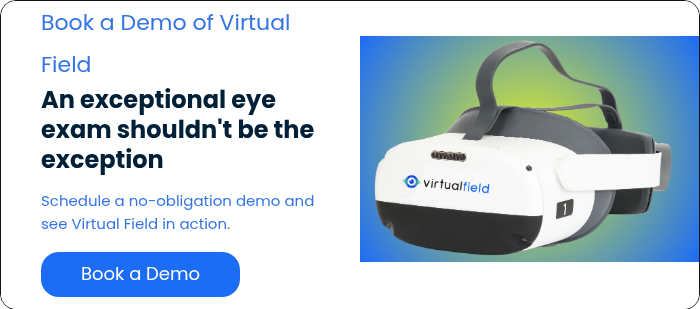
Outside the lecture sessions, the exhibit hall was abuzz with attendees exploring the latest industry solutions. Virtual Field’s team was thrilled to appear in this energetic hall. Stationed at booth #208, we welcomed a constant stream of visitors, from veteran oculoplastic surgeons to curious fellows and practice administrators, all eager to see our technology up close. Our team offered hands-on demonstrations of our VF3 Pro, allowing physicians to test visual field exams, ptosis measurements, and more on our lightweight virtual reality perimeter. The interest was tremendous; many attendees remarked on the speed and convenience of performing visual fields with a portable device, and how this could enhance efficiency in their clinics.
We also debuted our new DICOM 360 Sync integration at ASOPRS 2025, and it quickly became a talking point of the exhibit hall. This connectivity feature enables seamless, instant, automatic, error-free data exchange between the VF3 Pro and clinic EMR systems. In other words, each visual field test result can sync directly into the patient’s electronic chart without any manual uploads or delays. Surgeons and practice managers were excited by the prospect of eliminating tedious data entry. Zero-touch integration means no more scanning printouts or chasing files.
The strong interest in DICOM 360 Sync at our booth was a testament to how much clinics value workflow automation. Attendees could clearly envision how fully digital visual field reporting would save time and reduce errors in their practice. Virtual Field’s leadership in automating oculoplastic diagnostics and streamlining clinical workflows was on full display, reinforcing our reputation as an innovator in the field.

Leading the Future of Oculoplastic Practice
After two days immersed in oculoplastic knowledge-sharing, we left Orlando inspired and grateful. Virtual Field was proud to be a part of this year’s event as both learners and innovators. The enthusiastic response to the VF3 Pro and DICOM 360 Sync underscored the community’s readiness to embrace cutting-edge tools that make eye care more efficient.. We thank all the surgeons, fellows, and eye care professionals who stopped by our booth #208 to connect with us.
As we continue to push the envelope in automated diagnostics, Virtual Field remains committed to supporting oculoplastic practices with solutions that elevate patient care and simplify workflows. The future of oculofacial surgery is brighter and more connected than ever, and we’re excited to be leading the way in shaping that future.
To explore our technology, request a demo at any time from a member of our team.
We’ll see you next year!
About Virtual Field
Virtual Field delivers an exceptional eye exam experience. Eye care professionals including ophthalmologists and optometrists examine patients faster, more efficiently, and more comfortably than ever before. Exams include Visual Field, 24-2, Kinetic Visual Field (Goldmann Perimetry), Ptosis, Esterman, Color Vision, Pupillometry, Extraocular Motility (EOM), and more.
